Over 150 years ago, all London's sewage was being flushed directly into the Thames every day resulting in widespread diseases such as Cholera and Typhoid. On a blazing summer day, the stench from the Thames was so overpowering that MPs vacated a committee room because of what was to become known as the 'Great Stink'. Some two months later, Parliament had passed an enabling Act to raise the £3 million to build a network of giant intercepting sewers and pumping stations. The plans were the brainchild of one of the greatest Engineers of the Victorian age, Joseph Bazalgette. Though an engineering masterpiece, which has served the capital well, the system now needs extending to ensure it can cope with increasing sewer flows. However, modern-day pressures on the Victorian sewer system, such as population growth, more intense rainfall linked to climate change and concreting over green spaces are all increasing the urgency of the Thames Tunnel solution. So today, 150 years on, Thames Water can be seen on the same stretch of river, commencing works on what will be the next chapter in Bazalgette’s legacy.
The Thames Tideway Tunnel Project is for the installation of a 32km long sewer, deep beneath London, to significantly reduce levels of sewage entering the River Thames. The Thames Tunnel, which will broadly follow the route of the River Thames - at 7m in diameter is big enough to drive three London buses side by side - is planned to run from West London to Thames Water’s Beckton Sewage Treatment Works in Newham. Although the precise route is not yet finalised, it will need to connect to the 34 most polluting points where sewage currently flows into the river from the original Bazagette network.
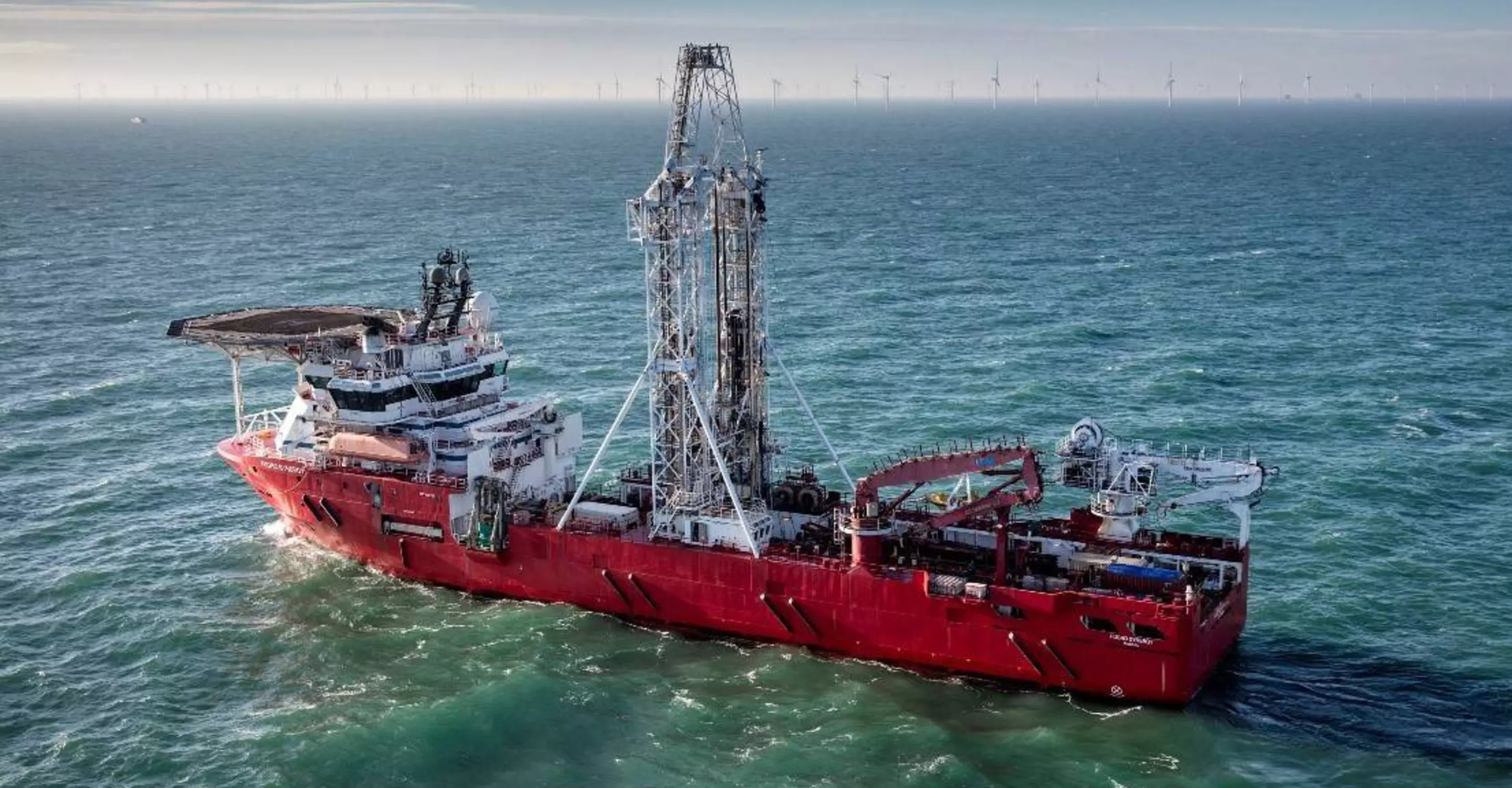
Fugro Seacore secured the exploratory drilling and sampling works to complete 85 boreholes, drilled to depths of 80m below mudline from 3 jack-up platforms to analyse the ground conditions engineers boring the proposed tunnel are likely to encounter. This marked the start of a nine month programme of borehole drilling, sampling and down-hole testing along the river. The tunnel will run at a depth of 40m in the west descending to 70m below ground level in the east. The boreholes in the river are key to assisting the Client in developing a detailed design for the Thames Tunnel, ahead of submitting a planning application. In addition, the information gained from the ground at previously unexplored depths below the surface of London, will be added to a national library of samples, which is held by the British Geological Survey.
The initial stages of the project involved close liaison with the Port of London Authority [PLA] prior to mobilising the jack-up rigs in the river, to minimise noise and disruption to other vessels on this very busy waterway. Regular planning meetings were held throughout the duration of the project to keep the authorities notified of any changes in programme and sequence. There have been many logistical challenges on the project including the transiting of the jack-up platforms below bridges, working in an extremely busy waterway and working on a site 30km long.
Drilling was a combination of two techniques: shell and auger and Geobor rotary drilling to depths of 80mbgl. The shell and auger boreholes of this depth proved to be particularly challenging as the casing diameter had to be reduced during drilling as it is telescoped down from the mudline where it started at 250mm, decreasing to 200mm then a final diameter of 150mm. The sampling regime consisted of U100, SPT and bulk samples, all of which have been prepared onboard the jack-up and sent to the logging yard for analysis. The rotary coring produced excellent recovery in the London Clay, Lambeth Group and Chalk beds.
The operation of three jack-up platforms required a continuous supply of drilling consumables as well as support in the way of waste transfer, crew change and replacement plant and equipment. A marine compound was located on the Greenwich Peninsula to solve this issue. Transport on the river was provided by a subcontract marine service, Capital Pleasure Boat Services (CPBS) who operate within the Port of London. They provided Fugro Seacore with vessels for towing, crew transfer and the transportation of plant and consumables.