home
Fugro ©2012 , All rights reserved

North Antrim Outfalls Scheme

North Antrim Outfalls

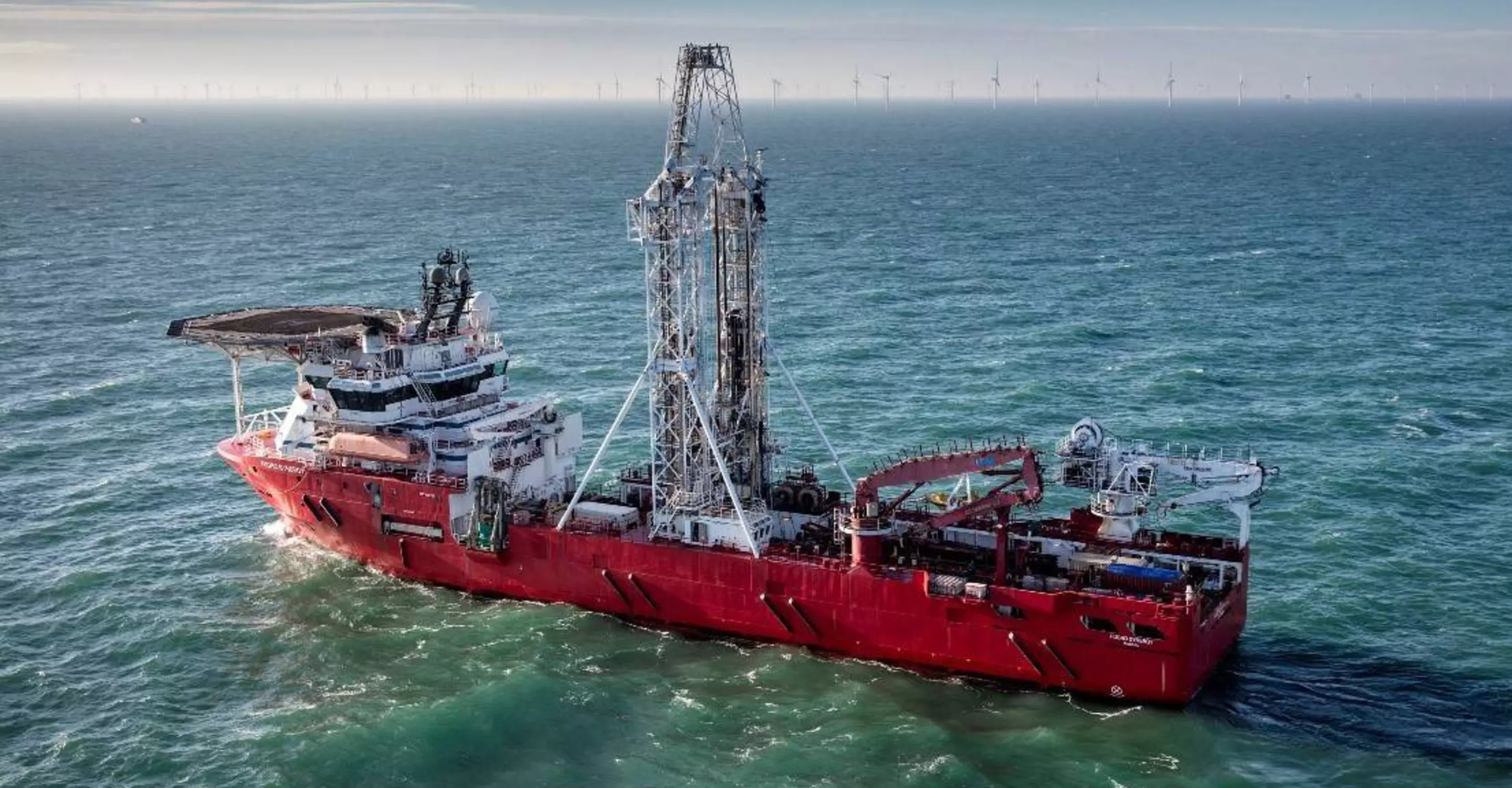
Fugro Seacore successfully completed the last of four separate sewerage outfall pipeline schemes in the exposed and hostile coastal waters of the Irish Sea on its debut construction contract in Northern Ireland. The company adapted its versatile Skate 4 jack-up platform fitted with an hydraulically operated grab to produce a novel and innovative seabed trenching and pipelay system.

Fugro Seacore's c. £2.8M contract for the four projects formed part of the North Antrim Outfalls scheme, designed by Belfast based consulting engineer Kirk McClure Morton for the Department of the Environment Water Service, to upgrade the existing sewer systems and improve water quality along the coastline. The last of the four outfall schemes at Kilkeel, south east of Belfast in County Down, with a contract value of approximately £1M, involved working in 14m of water and placing 750m of 355mm diameter HPPE pipeline and three risers in a seabed trench. The same technique was used to lay a combined 1600m of 250mm, 350mm and 500mm diameter pipeline and diffusers in up to 22m of water at Cushendun, Cushendall and Glenarm.

Working from the stable platform that Skate 4 provides, Fugro Seacore was able to dig accurately a 2m deep trench in the seabed in up to 23m of water and precisely side cast the spoil parallel to and up to 10m away from the excavation, ready for use as backfill.  After the controlled digging of a 24m section of trench, the platform was jacked down and moved before being re-established, for digging to continue on the next section of the pipeline route. As Skate 4 progressed along the route, high performance polyethylene (HPPE) pipe, complete with concrete ballast collars, was slowly fed off the "stinger" frame on the end of the platform into the previously excavated trench.

Once positioned and jacked up out of the water the digger leg, complete with its hydraulically operated 1m wide grab, was lowered so the grab rested on the seabed. The deck of the jack up, which had a height transferred from a bench mark on the shore, provided the height control for the operation. The grab operator, working to depth marks on the digger leg referenced to the local datum, commenced the 2m deep excavations.   On reaching the required depth, the digger leg and grab, complete with finger pontoon, moved by means of a hydraulically driven rack and pinion mechanism, along the side of the jack-up to its next position for excavation to continue. This sequence was repeated, incrementally moving the finger pontoon along the side of the jack-up to complete a 24m run of trench. At the same time as the trench was being excavated, sections of the HPPE pipe were fusion butt welded together. Concrete ballast collars were fastened onto the pipeline at this stage, ready for launching off the stinger and into the open excavation while the jack-up was floating and manoeuvring along the pipe line route by means of her own anchor spread. This sequence was repeated to complete the construction of the pipeline, prior to the installation of the diffuser pipe work, risers and ports. These, along with pre-cast concrete diffuser protection domes, were placed on the seabed using a combination of the grab, Skate 4's onboard pedestal crane and specialist diving subcontractors.

The jack-up was then carefully manoeuvred back along the pipeline route, using divers and its crane to place a covering of bagged aggregate around the pipe; the grab used to pick up the spoil from the side-cast stockpile and backfill the trench to the natural seabed level. "The Kilkeel site is quite exposed and a significant advantage of Seacore's innovative trenching system is its ability to work in quite bad weather," said Kirk McClure Morton resident engineer David Scott. "Seacore has a very good system, were really flying in the silts, sands and clays, and made very good progress. I've been very impressed with their attitude and it has been very easy and enjoyable working with them. Seacore have done a good job and we would use them and the system again."

Skate 4 moved onto the Kilkeel location at the beginning of May, laying the new pipeline adjacent to an existing short outfall. Working round the clock in two 12 hours shifts, averaged excavation of 192m3 of stiff clay from a 96m run of trench and placed 72m of pipe in each 24 hour period. "Our Skate 4 jack-up, with its integral digger leg, grab and stinger, has proved ideal for pipe laying in up to 22m of water," said Seacore project engineer Les Lugg. "The system provides totally controlled and precise digging with precision pipelaying and backfilling of the trench. It's not a hit and miss operation as with floating plant, which would have been extremely difficult to use on this job. The sea gets quite rough here and floating plant would be continually running back to harbour for cover. "Seacore laid, back-filled and completed its 9 week Kilkeel outfall pipe contract three weeks ahead of programme."